HIREX
Best Case Thermal Results

Off-Axis Telescope Thermal Analysis:
The first marginally successful analysis is based on the following conditions:
-
Reflected Energy: 40%
-
Absorbed Energy: 13%
-
Transmitted Energy: 47%
-
Emissivity: 40%
These numbers are extrapolated from preliminary measurements of similar
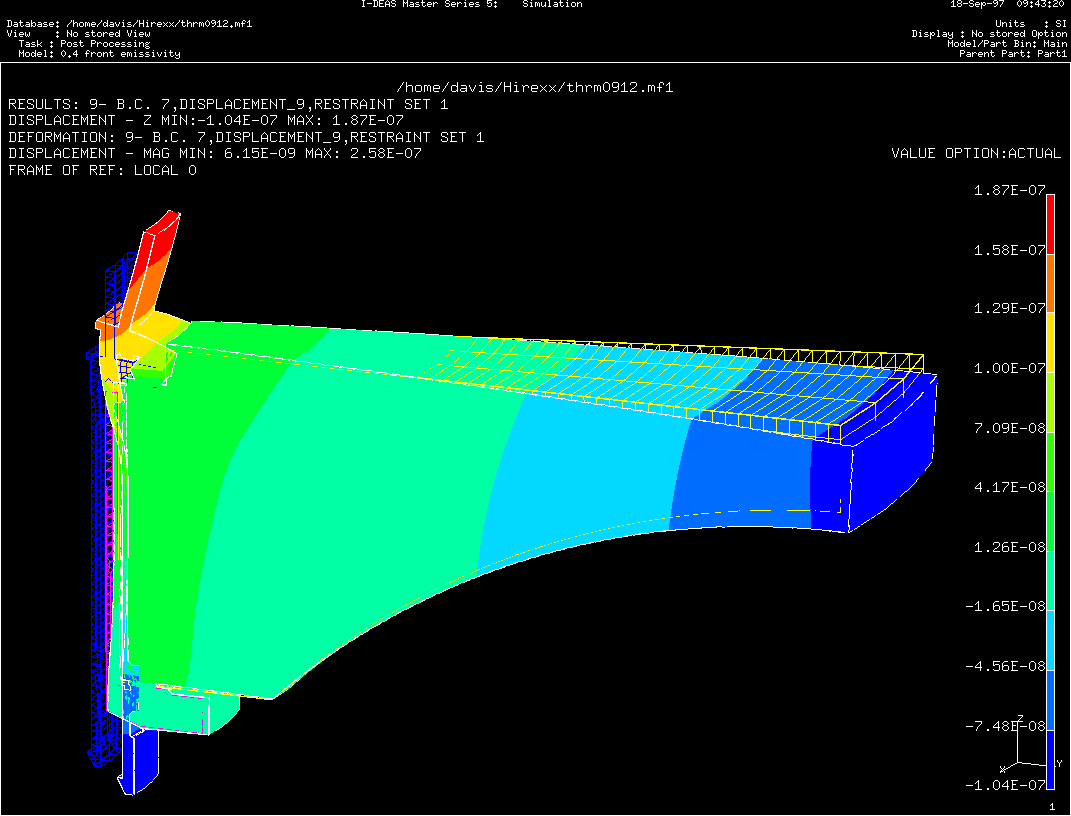
mirror coatings. Using these numbers a preliminary analysis of mirror
deflection and temperatures
due to solar heating was determined (Note the units of deflection are
given in meters).
The resulting surface deflection is graphed below, with and without
a best fit parabola removed.
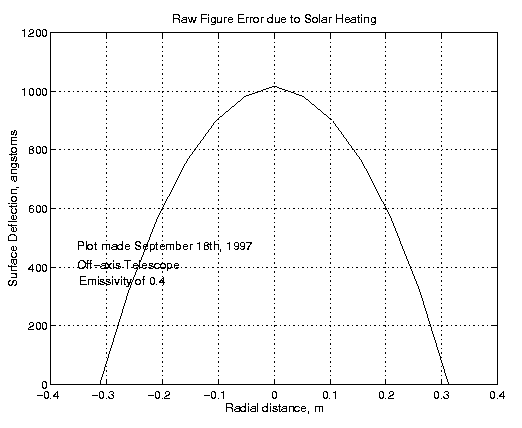
True Surface Error Induced by Solar Illumination
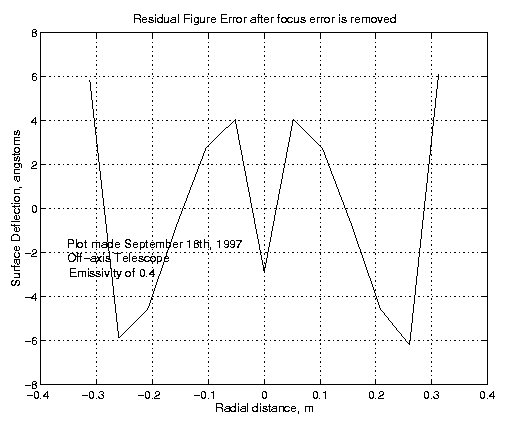
Residual Surface Error after best fit Parabola is Removed
These results are obtain in spite of the fact that the mirror is not controlled
to an isothermal state.
The result of earlier thermal calculations
can be seen here.
On-Axis Telescope Thermal Analysis:
One of the main drawbacks with the on-axis design, and what appears to
be its fatal flaw, is the fact that the primary mirror is unevenly illuminated.
This results from the penumbral shadow cast on it by the secondary and
the resulting uneven temperature distribution. The solar flux distribution
calculation is shown here.
Thermally induced deflection and
thermal results, under the same conditions
as shown above, for a segment of a centrally supported, non-uniform thickness
mirror with uniform illumination are shown here. The combination of back
surface shape and central hole result in a 10 fold increase in residual
surface error over the off-axis case.
The resulting surface deflection is graphed below, with and without
a best fit parabola removed.
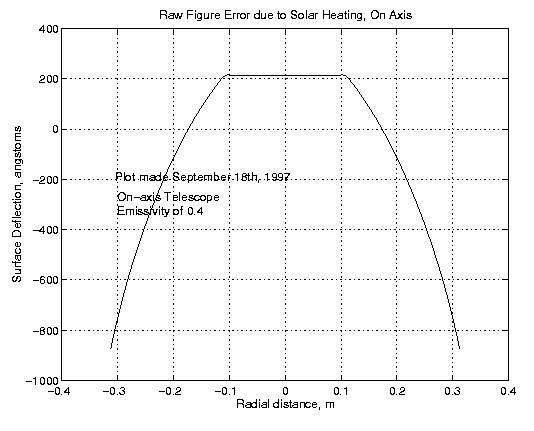 True Surface Error Induced by Solar Illumination
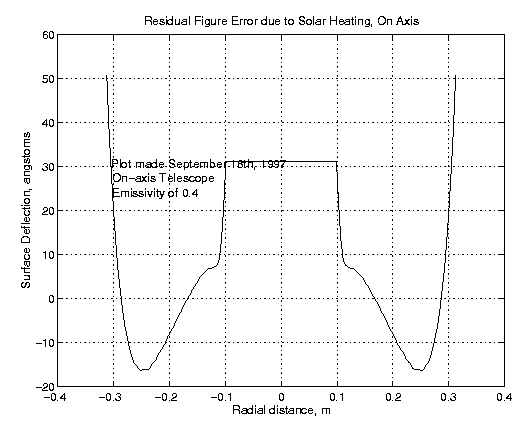 Residual Surface Error Induced by Solar Illumination
Future analysis will determine the mirror deflection for the uneven
illumination case, it is, however, certain to show a high deviation from
an acceptable mirror figure.
Questions, comments pcheimets@cfa.harvard.edu