Early Thermal Results

Several early calculations of the resulting temperatures caused by the solar flux on the HIREX primary mirror were made. Various conditions were looked at and the resulting temperature distrubutions were used to determine the effects on the final mirror figure.
The first calculations involved a single node assumption to find the range of likely mirror temeperatures based on varying the mirror radiative properties.
Several possible approaches toward achieving a 20-25o C mirror with a small thermal gradient were examined once a sample of a possible coating was received. One important property of the coating was that it is fairly tranparent. Before having reflectivity and tranparency measurements on the sample we examined two distinct appoaches.
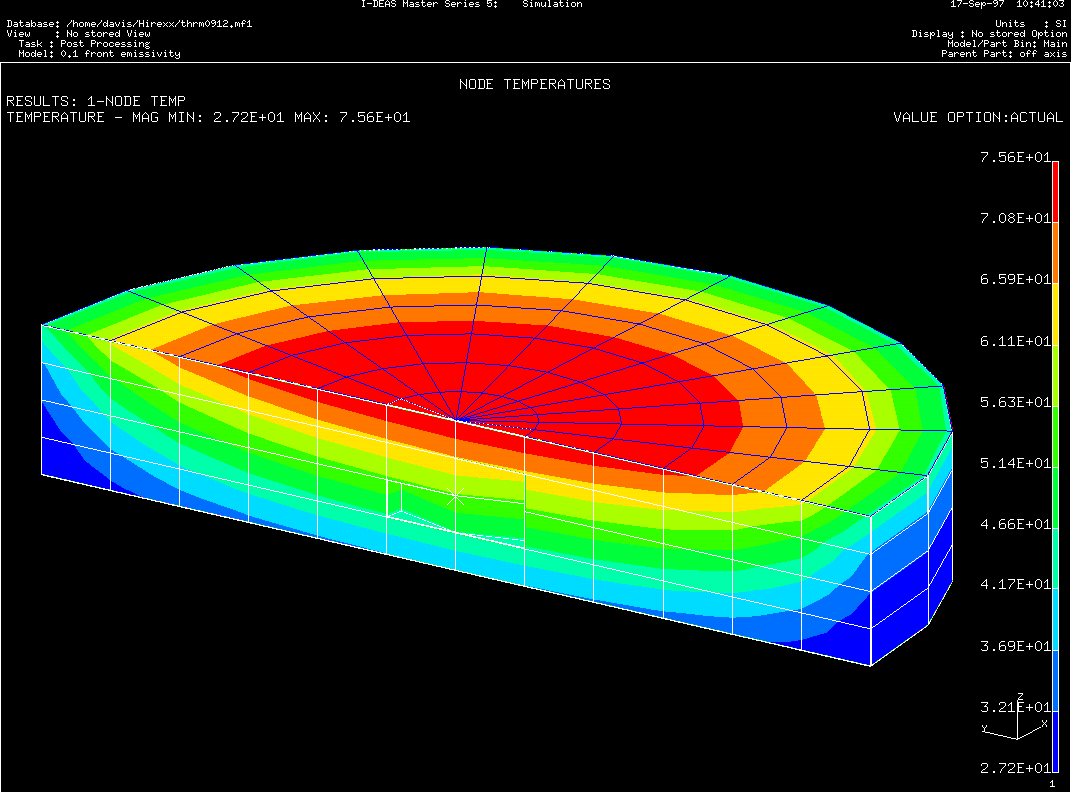
In the first case the bulk of the light will be reflected away before it can be absorbed. Unfortunately the emissivity is reduced , from around 0.4-06 from the bare multilay to a maximum of 0.1 for aluminum. Though less heat is absorbed over time, the equilbrium temperature is still much higher. This is shown on this graph, with the emissivity at 0.1.
The second case assumes that it is better to reflect the light that passes through the coats than it is to allow it to be absorbed in the mirror substrate. This results in higher absorbtion but much higher emissivity as well. This effect can be seen in this graph with the emissivity at 0.4-0.6.
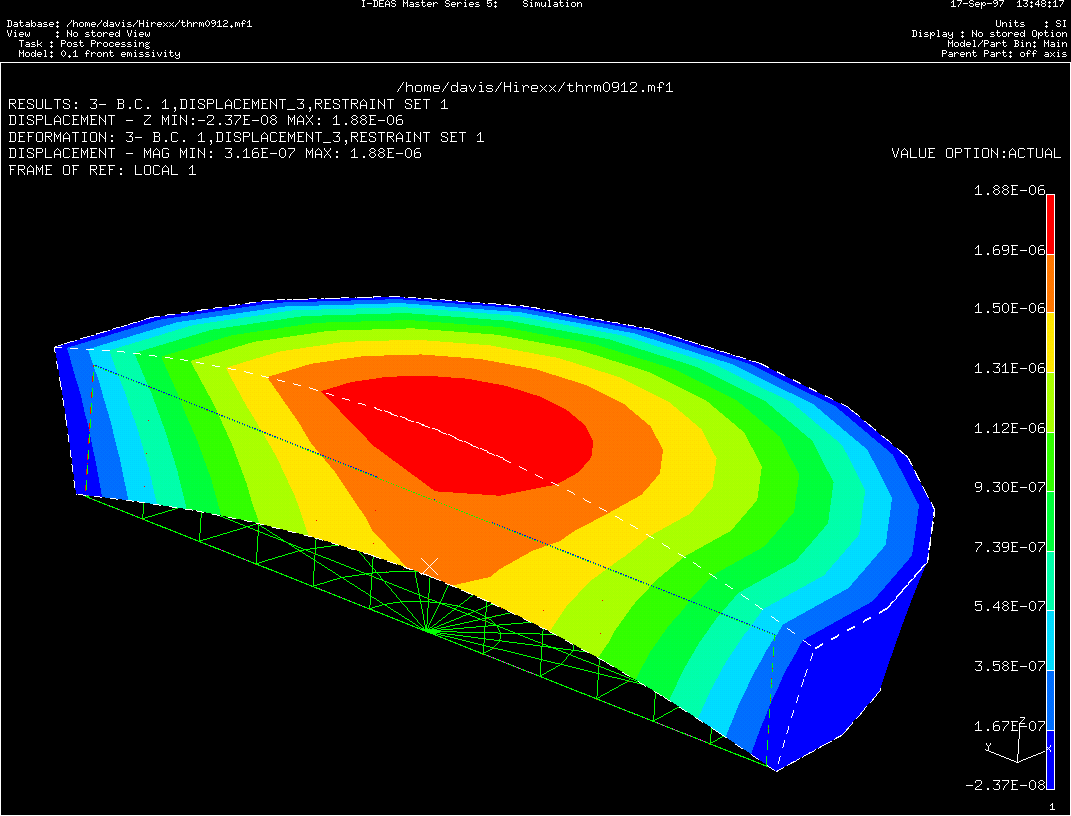
The temperature and deflections were determined assuming an aluminum overcoat for the off-axis case. Because of these result, this approach was determined not to be feasible.
Questions, comments pcheimets@cfa.harvard.edu