Statistics on NEO and NEOCP
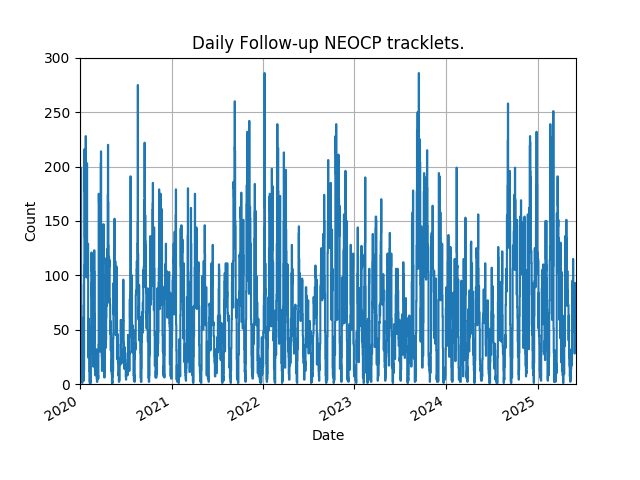
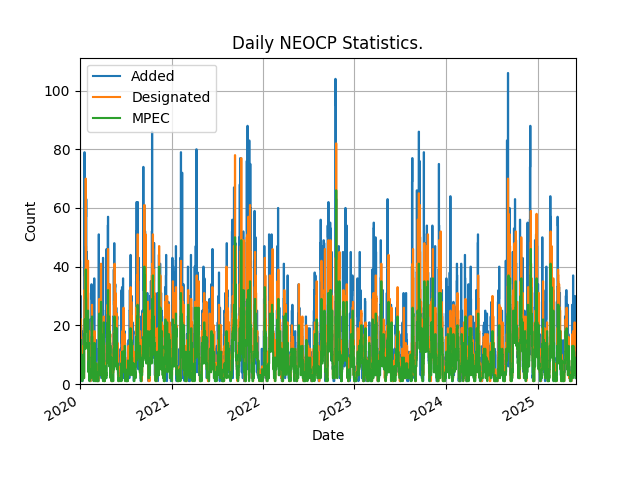
LEFT: Daily insertion of NEOCP follow-up tracklets., RIGHT: Daily insertion, designation and MPEC-issuing of NEOCP candidates.
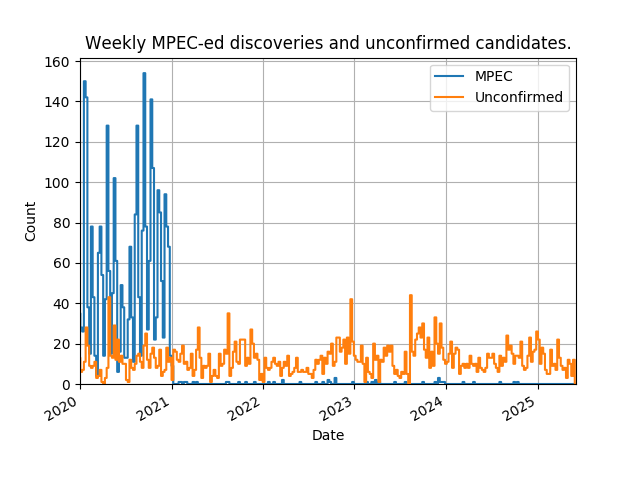
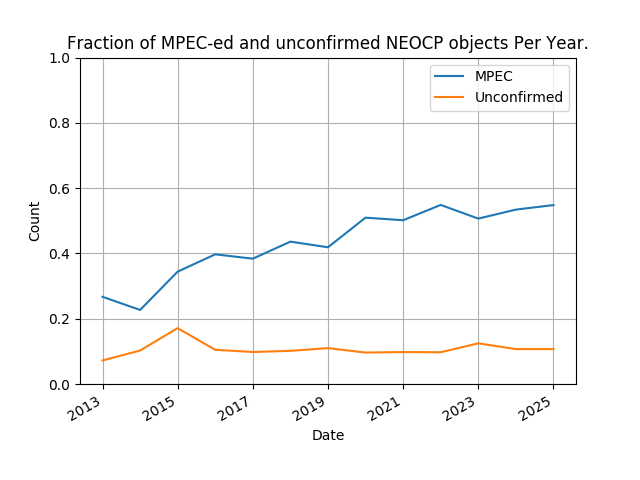
LEFT: Fraction of unconfirmed and MPEC-ed NEOCP candidates per year, RIGHT:Counts of MPEC-ed and unconfirmed NEOCP candidates..
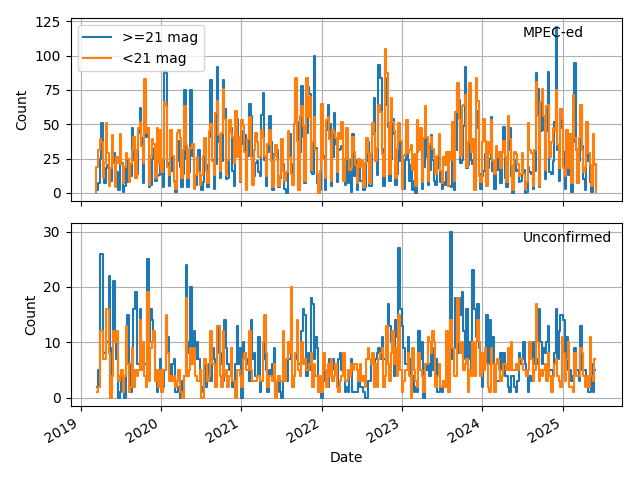
MPEC-ed and unconfirmed NEOCP candidates, in two magnitude bins, binned by week.
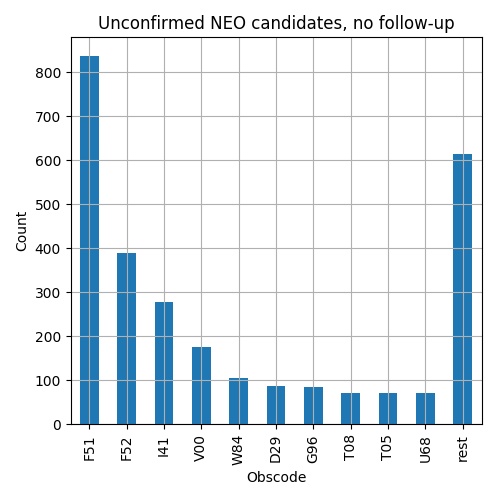
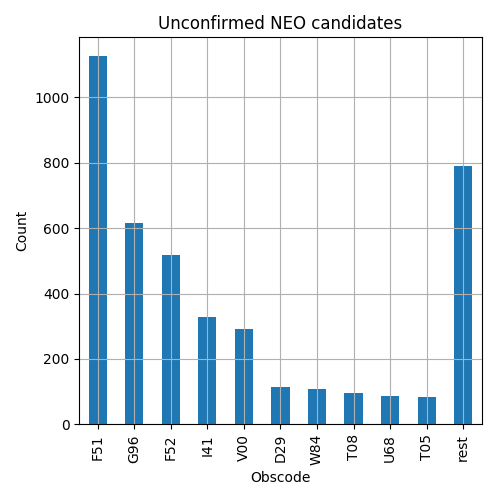
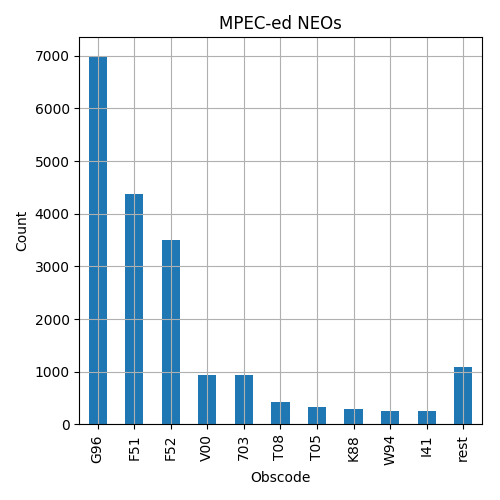
Comparison of discoveries versus unconfirmed NEO candidates since Feb 2019. Follow-up attempt is derived from NEOCP follow-up report forms.

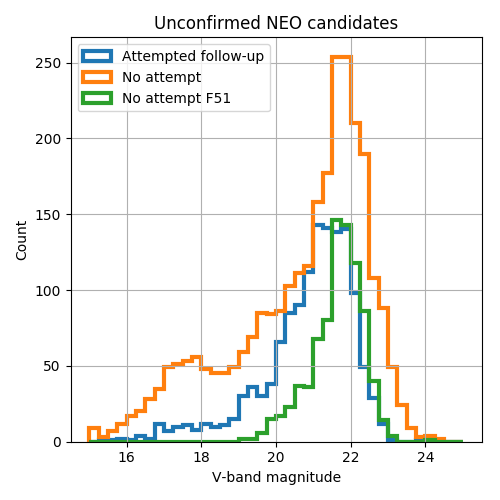
LEFT: Magnitude of unfound NEOCP candidates with and without attempted follow-up. RIGHT: How many follow-up attemptes were made per unconfirmed NEO candidate.
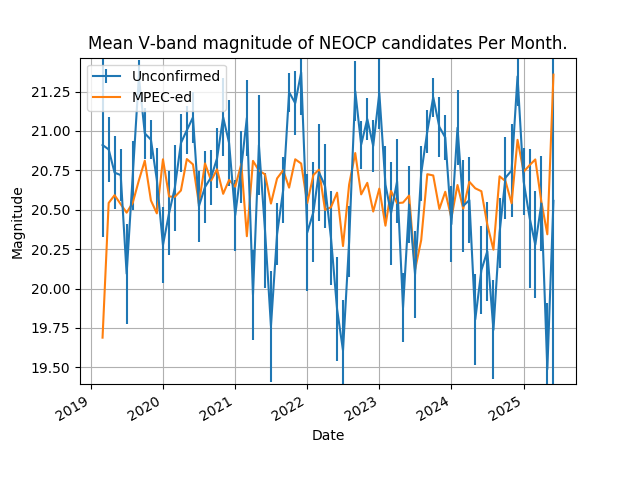
Mean V-band magnitude of initially unconfirmed NEO candidates and MPEC-ed NEOs.
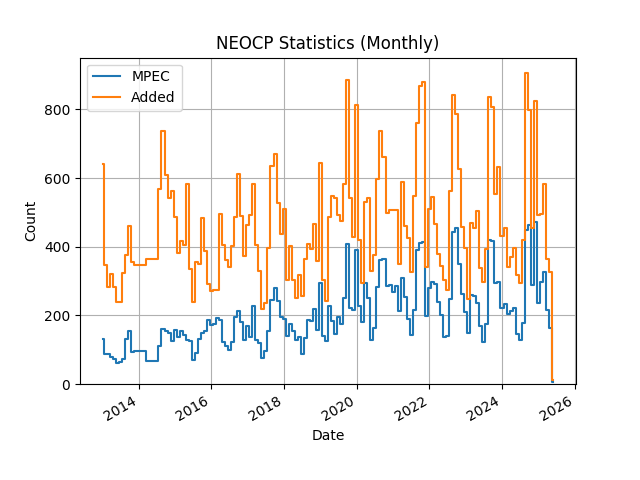
Monthly statistics of added and MPEC-ed NEOCP candidates.
NEOCP follow-up analysis
Following figures analyze 15 most active follow-up sites (by observatory code and tracklets), since Feb 26, 2019. Plots are generated daily.
Follow-up means reports of astrometry of any NEOCP object after the discovery date and before the object was designated or removed from NEOCP.
First follow-up is the first report of follow-up after discovery tracklet was posted onto NEOCP. Precoveries are NEOCP tracklets with dates preceding the discovery time of NEOCP tracklet (archival searches).
Following scatter plots show quantity of tracklets by most active follow-up sites by all NEOCP follow-up, first follow-ups and precoveries as a function of mean V-band magnitude
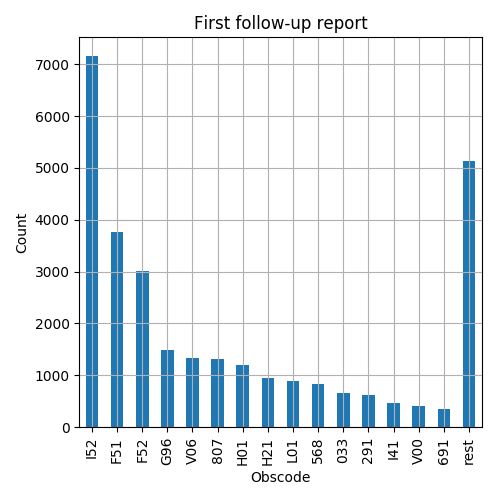
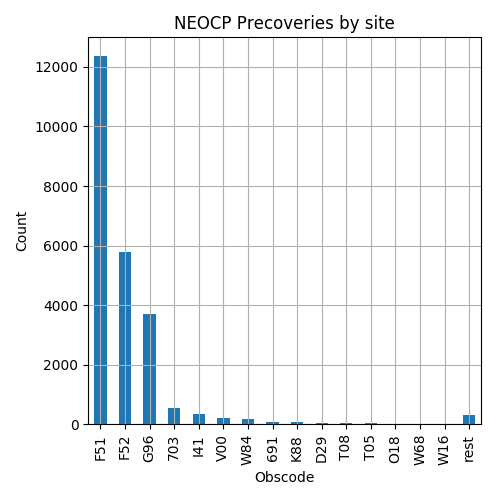
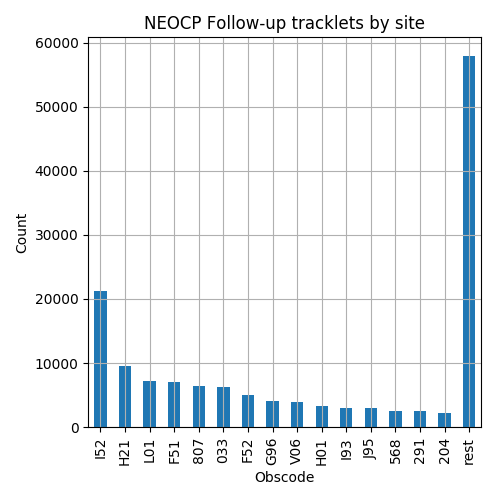
NEOCP follow-up and precovery tracklets by 15 most active sites.
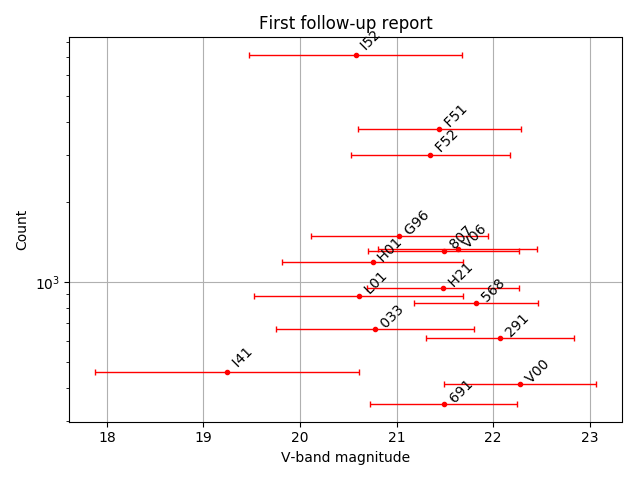
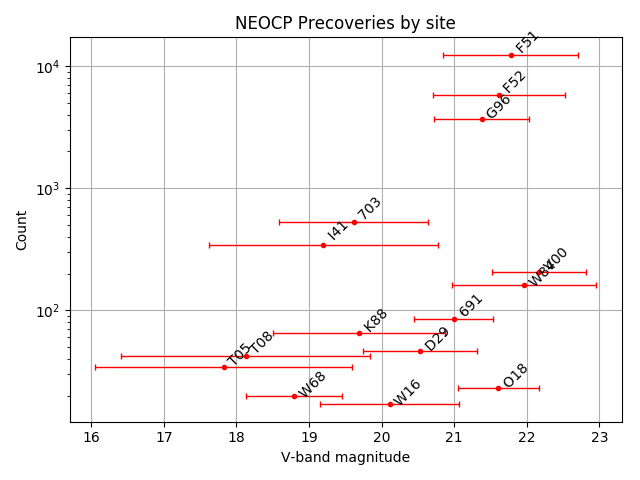
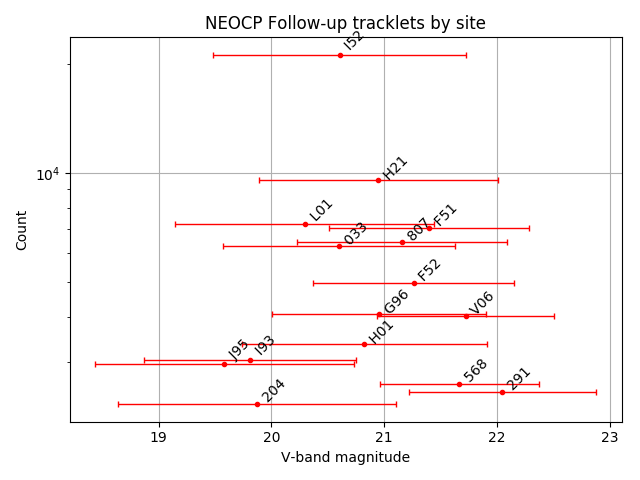
NEOCP follow-up and precovery tracklets and the mean V-band magnitude by 15 most active sites.
NEO Recovery MPECs (2019-mid 2020) STATIC PAGE
Recovery MPEC (with the subject text 'Revision of ***' where *** stands for previously issued MPEC for the same object) is published whenever a known NEO (or an interesting object such as TNO or highly eccentric object) that has been previously observed in one apparition has been observed for the first time on a second apparition. This can often be years later after the first apparition.
To qualify for a recovery MPEC, at least two nights have to be provided on a second apparition (apparition prior or after the discovery apparition).
Traditionally, this was the next apparition but recenty, also apparitions found in archival searches have been found and these precoveries (previous apparition in addition to single existing) qualify for a recovery MPEC
.
Often recovery MPECs originate from NEOCP - an unknown object is posted to NEOCP. After few follow-up tracklets it becomes apparent that it matches a known NEO that usually had a very short arc (on a single apparition) and it becomes recovered. At least two nights are required as well.
However, most recovery MPECs are not issued through NEOCP - Observers search for NEO recoveries and submit already identified NEOs to MPC, traditionally on two nights, to qualify for a recovery MPEC.
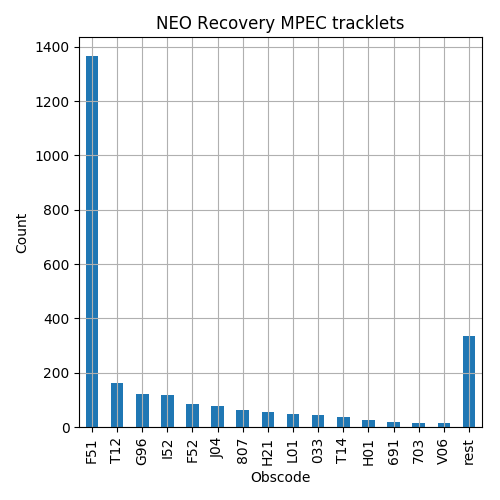
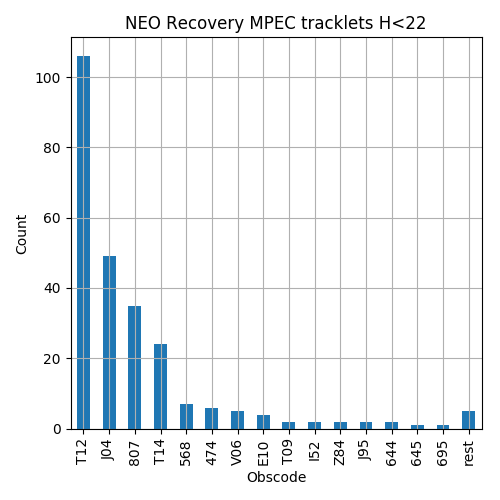
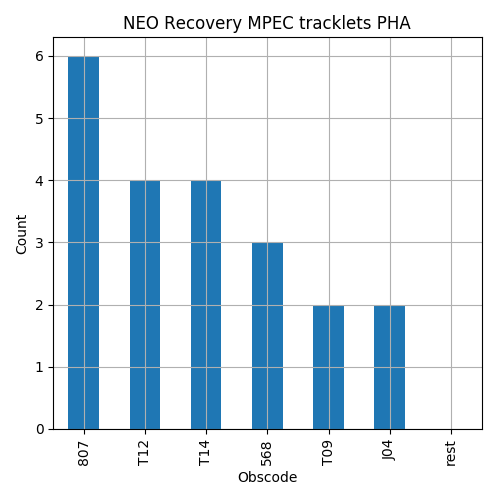
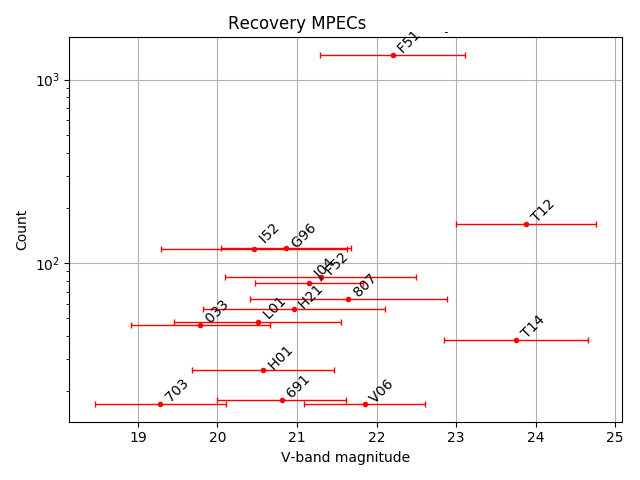
This analysis contains NEO recovery MPECs between Feb 27, 2019 and Jun 22, 2020. Total number of NEO recovery MPECs: 614. Recovery MPECs through NEOCP: 179. MPC pipeline recovery MPECs: 435. Plots below show (left to right) histograms of all, without surveys, H<22 and PHA recovery MPECs. Below are the same datasets showing counts of tracklets and mean magnitudes. Note the large number of F51 and F52 tracklets in first plot. This is due to archival search (Rob Weryk) that in addition to newly reported archival F51 and F52 tracklets provides ITF tracklets (267 recovery MPECs). Figures two-four do not contain Pan-STARRS archival searches.



Sky coverage
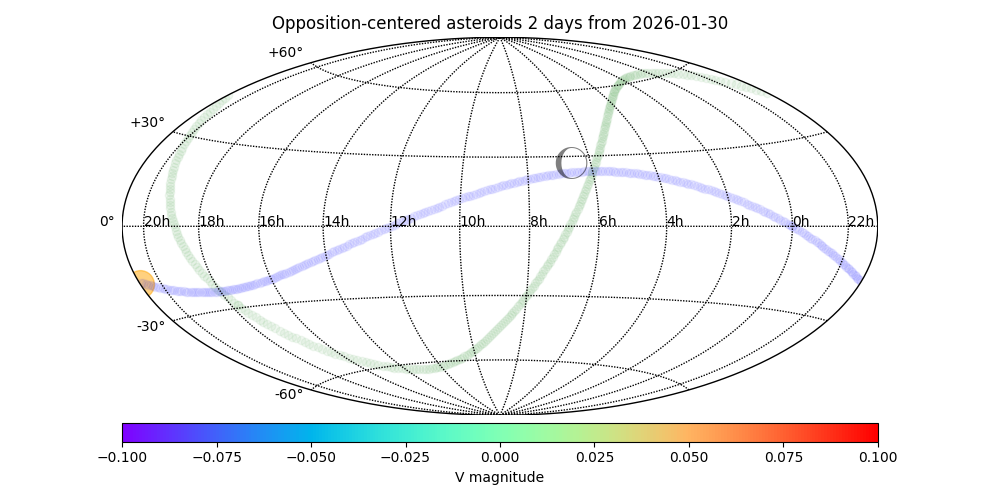
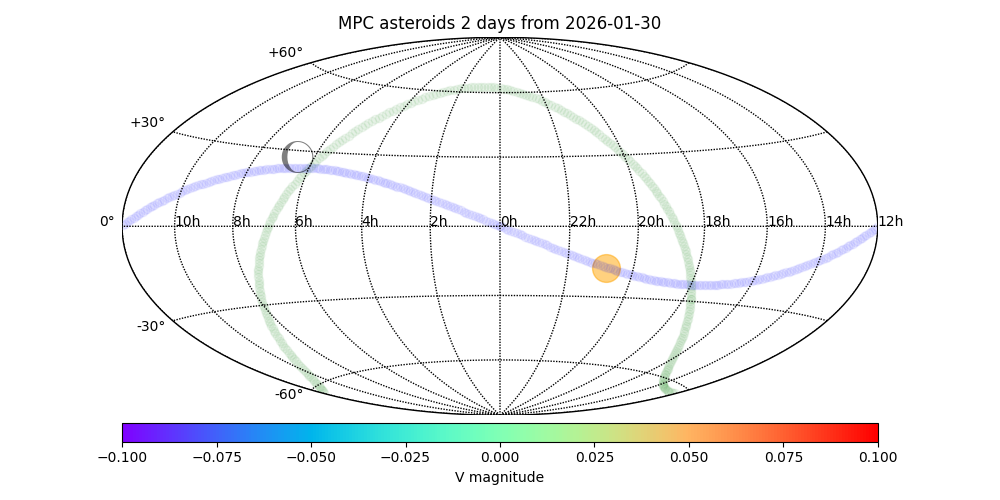
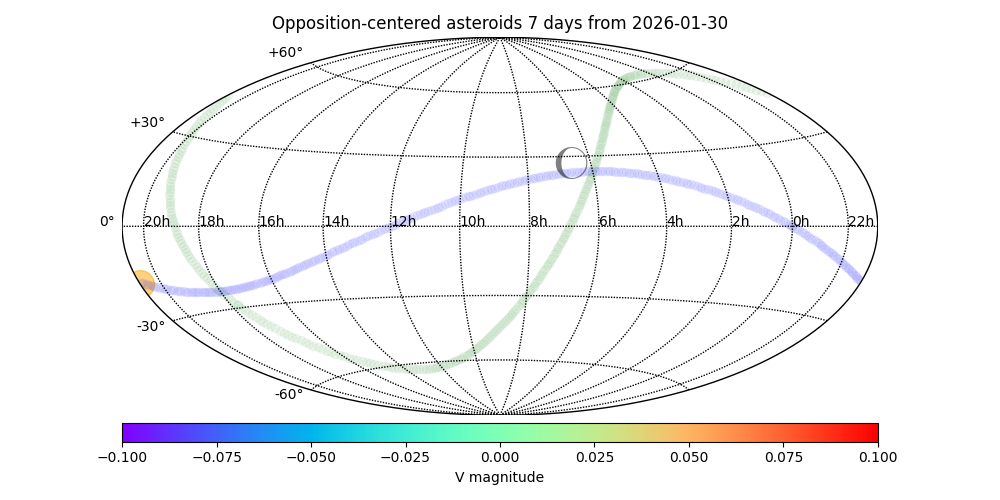
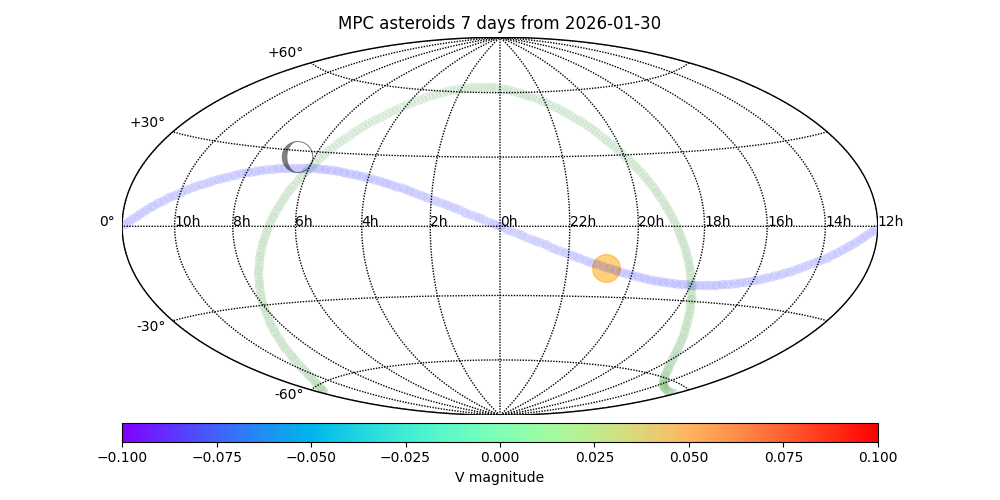
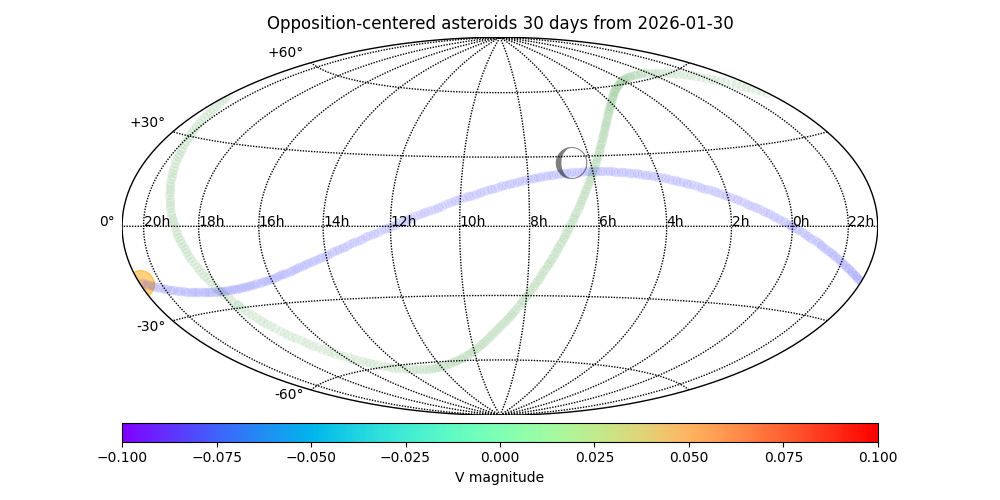
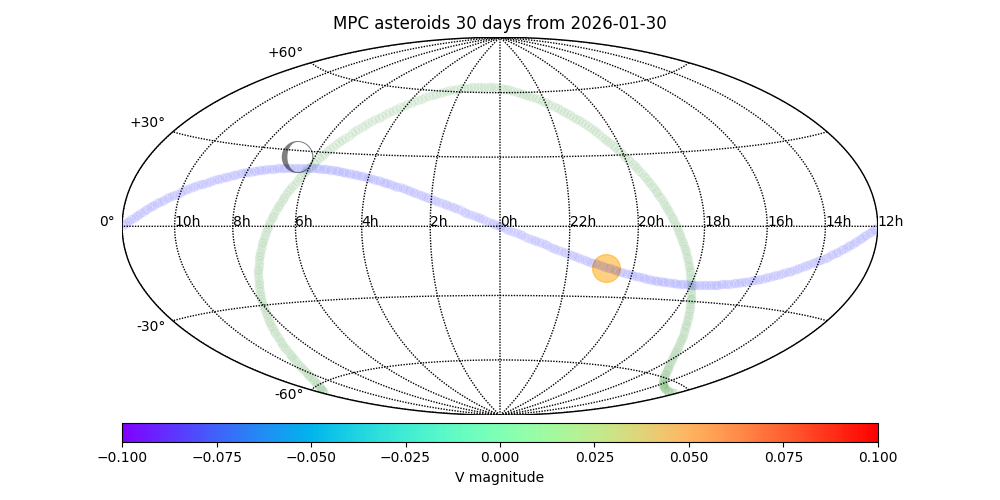
Opposition-centeted (left) and equatorial (right) right ascension and declination of asteroids observered within the last 2, 7 and 30 days. The location of the Sun and Moon (with phase showed) corresponds to the current date. Plots shows all received tracklets.